
It started with a call about Mondays.
The first conversation was with Remy Keenan, who looks after operations at Showcase Cinemas. The ask was not about AI. It was about Mondays: every site's showtime schedule had to be rebuilt at the start of the week, the team was losing more than forty hours a week to it, and when a weekend went sideways the rework could not be done fast enough to matter.
Showcase runs multiplexes across the UK, with its Cinema de Lux venues at the premium end. Each site needs a plan for the week: which film, on which screen, at what time, from first matinee to last showing. That plan was built by hand, in spreadsheets, and a strong Saturday could leave it out of date before Monday's coffee.
That is an expensive way to plan a week. The hours went in, one weekend's results could prove them wrong, and the reschedule that mattered most was the one the process could not deliver.
We started with an audit, not a demo.
The first job was to map the week as it actually ran. We shadowed the scheduling team through a full cycle: the weekend numbers landing, the spreadsheet build, the emails between sites, the point on Monday where the plan met reality. We timed where the hours went and logged every handoff and every workaround.
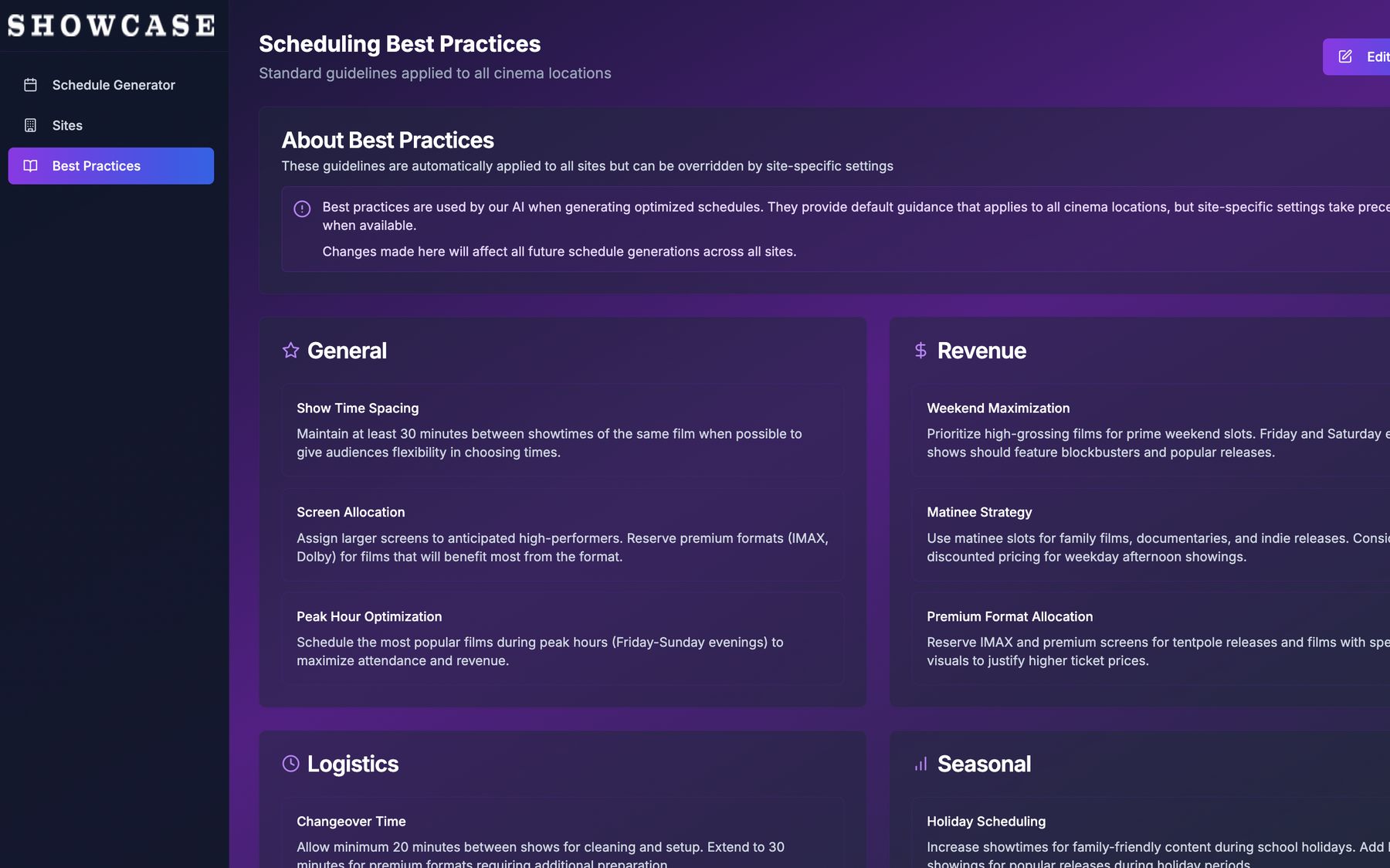
The conversations mattered as much as the shadowing. Schedulers and site teams carry rules that are written nowhere: how far apart show starts should sit, what a changeover really takes, which releases earn the IMAX and Dolby screens, what changes over the holidays. We wrote them all down.
By the end we had a bottleneck map of the week: which steps created the value, which existed only because spreadsheets cannot reschedule a chain, and exactly where forty hours went.
We chose the engine by what it had to keep.
With the map, we scoped the options. Off-the-shelf scheduling modules were quickest and were ruled out first: the chain's edge is its own rules, and a template system would have flattened them. A classical rules engine could hold the rules but not the judgment: the messy spreadsheets, the one-off instructions, the reading of a strange weekend. A forecasting model built from scratch would have needed months of data work before it earned anything.
We recommended a Claude-based platform instead: the team's rules written down where they can be read and changed, and Claude applying them across the real-world inputs the team already produces, at the speed the chain needed. It fitted the job because the knowledge already existed. It just lived in people's heads and needed to run at scale.
Four weeks after that recommendation, the platform was live.
What runs now.
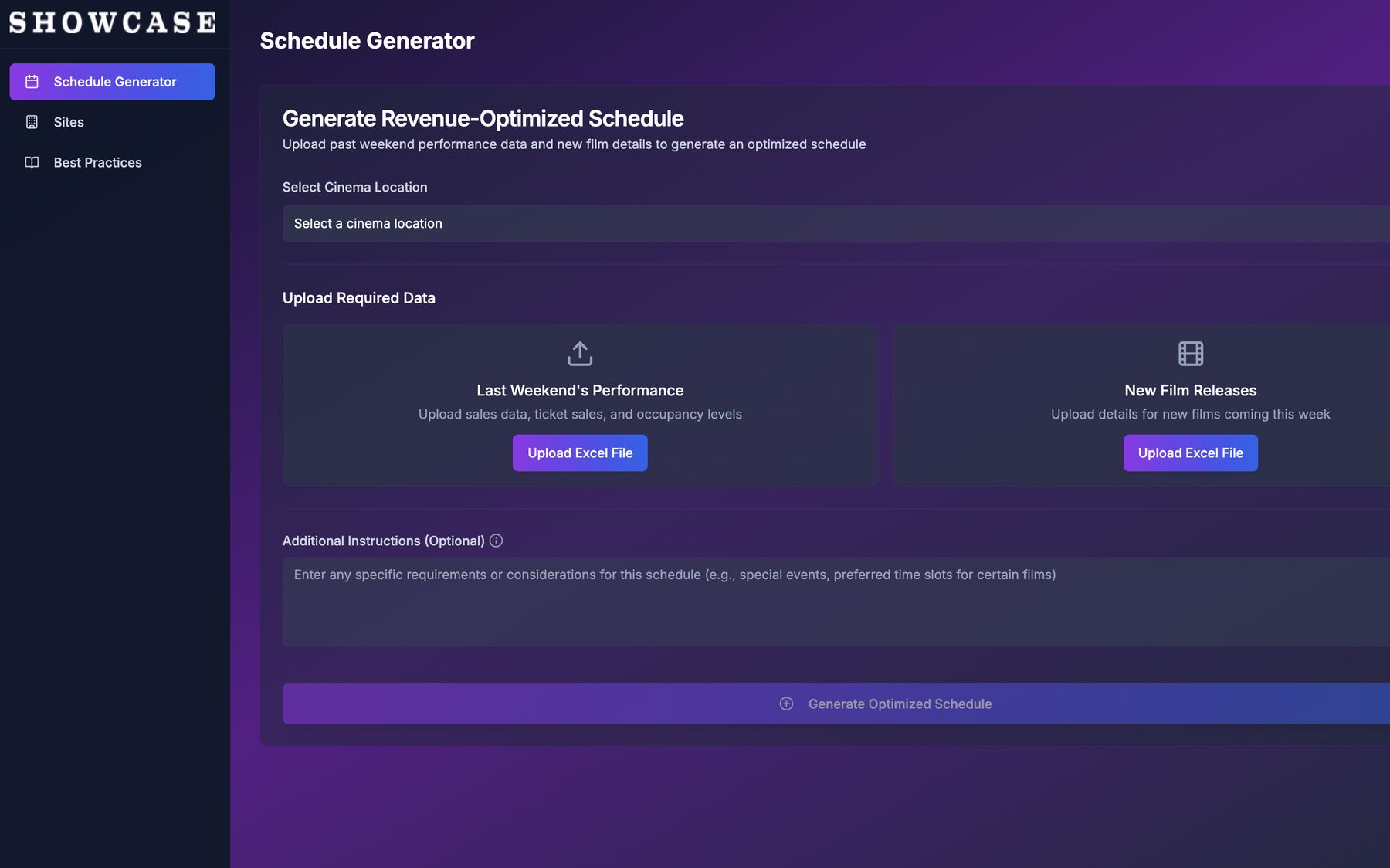
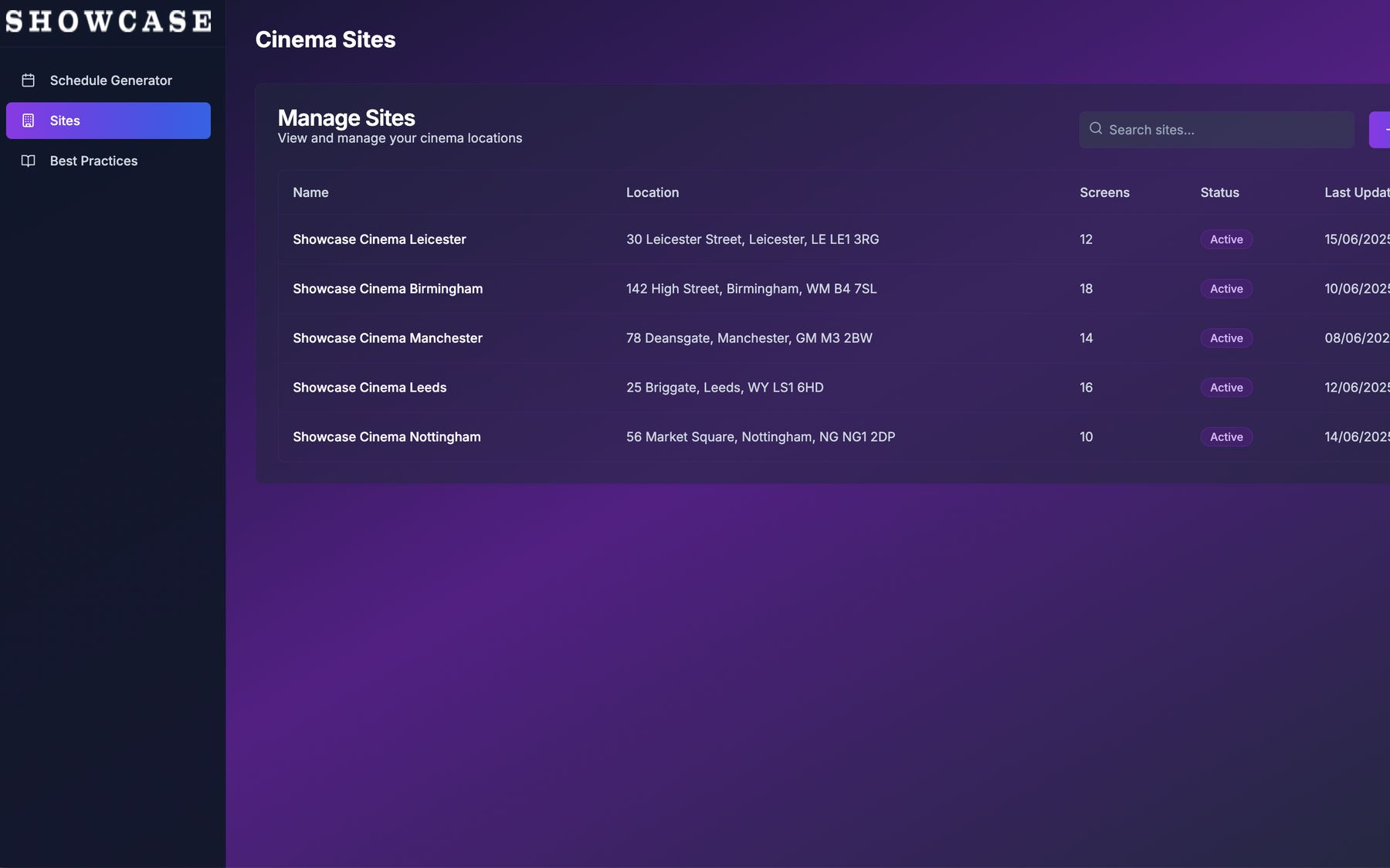
Monday starts with a run of the generator. Pick a site, load the weekend's sales, ticket sales and occupancy, add the new releases and anything unusual about the week ahead, and an optimised schedule comes back in seconds. The rules it applies are the team's own, held in Best Practices, where anyone can read and change them. Each site's settings take precedence over the chain's.
When a weekend surprises, that is no longer a crisis. Schedules regenerate from the real numbers, site by site, in time for the morning meeting.
Then we watched it work.
No system is right on day one, so we did not ask the team to trust this one. For the first weeks the platform ran in shadow: it generated its schedule alongside the one built by hand, and every difference had to be explained. Where the platform was right, the manual step retired. Where it was wrong, the miss was written into Best Practices and stayed fixed.
Behind that sits the discipline Anthropic recommends for systems like this: an evaluation set built from past weekends with known outcomes, every change to the rules scored against it before it ships, and every generation logged with the data and instructions that produced it, so an odd schedule can be traced rather than argued about.
The edge cases came as expected: holiday weeks, one-off event screenings, premium-format clashes. Each one was caught in review, became a rule, and stayed solved. The 95% and the 18% are measured after that process, not before it.